MalaAlert solutions

Technology that turns changing conditions into earlier local action.

MalaAlert connects community warning, frontline coordination and responsible decision intelligence so risk information can end in a practical next step.

Capability previews are illustrative and being validated with communities and partners.

Risk workspace · Preview

7-day outlook

Elevated

Human review required

Rainfall

Above range

Local reports

12 to review

Delivery

4 channels

Illustrative interface preview

One system, three experiences

Information for communities. Coordination for teams. Evidence for decisions.

Each solution area serves a different need while sharing the same warning, validation and learning foundation.

01Community early warningEarly access

Earlier guidance that can reach people where they are.

A low-bandwidth warning experience being validated for communities with different levels of connectivity, literacy and access to trusted health information.

Localized risk outlooks

Area-level risk, timing, contributing signals and clear uncertainty.

Offline-first Android and web access

Saved alerts and prevention guidance that remain useful with intermittent connectivity.

Multi-channel alerts

Coordinated app, SMS, WhatsApp, radio and frontline-worker communication.

Action guidance

Practical household and community prevention checklists linked to each outlook.

Local-language and audio guidance

Accessible formats to be co-designed and validated with participating communities.
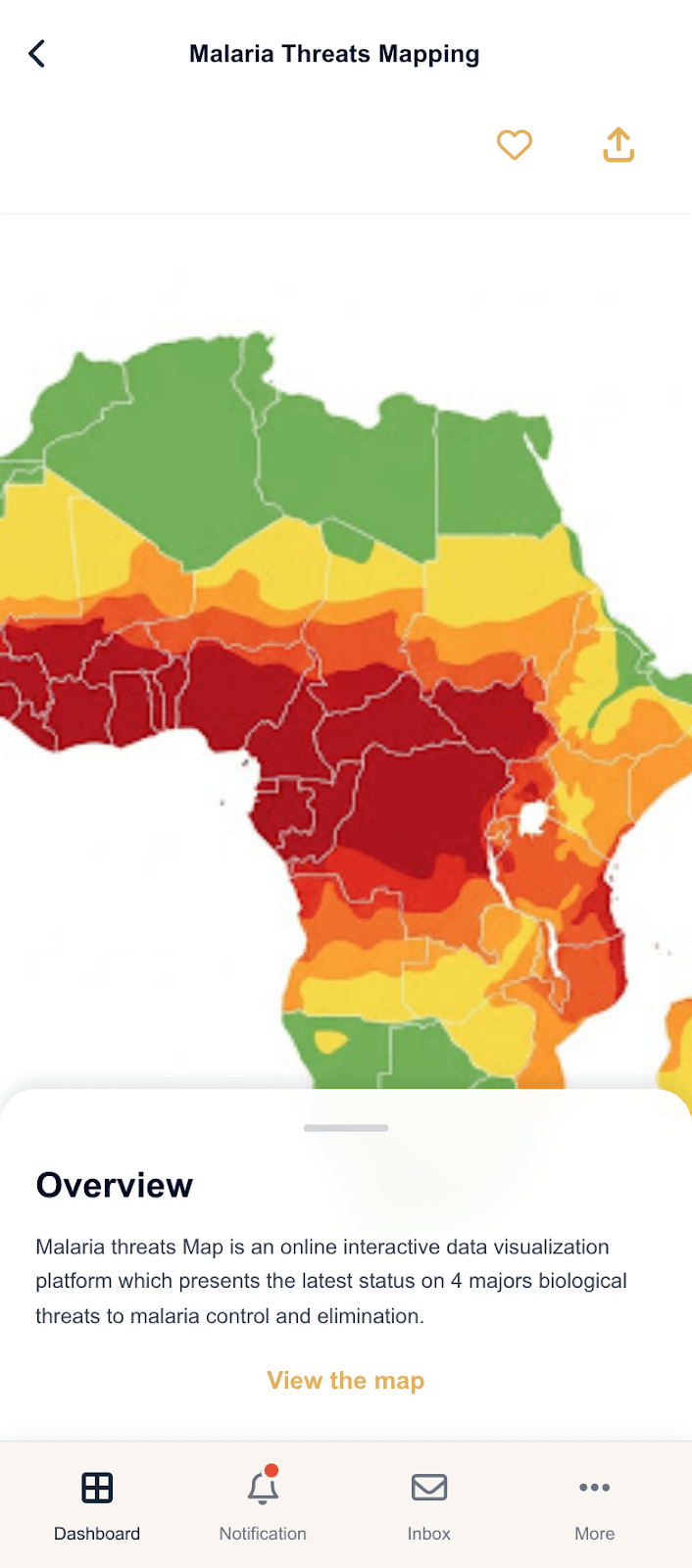
MalaAlert mobile app showing a malaria threats map with an overview panel and navigation.Illustrative interface preview
02Field and health coordinationEarly access

A shared operational view for trusted local response.

Tools intended to help frontline teams validate signals, coordinate preventive work and understand whether guidance is reaching the communities it is designed for.

Structured field reporting

Offline observations of flooding, standing water and local health trends.

Human validation

Review checkpoints for health, climate and community partners before public warnings.

Task coordination

Assignments and reminders for outreach, inspection and prevention activities.

Programme and coverage dashboard

A view of risk areas, reports, pending work and communities that may have been missed.

Recipient feedback

Simple ways to learn whether alerts were received, understood and acted on.

Programme workspace · Preview
Plateau response overview3 areas need review
Synced 12 min ago
01Review standing-water reports8 new
02Coordinate community outreach3 areas
03Confirm prevention messagesReady
Illustrative outreach coverage68%
Illustrative interface preview
03Data and decision intelligenceEarly access

Evidence to help limited prevention resources go further.

A partner-facing decision layer for testing how environmental, health and operational data can support responsible prioritization without replacing expert judgement.

Satellite-assisted environmental mapping

Potential standing-water, flooding and population-exposure context for field review.

Intervention prioritization

Decision support for directing constrained outreach and prevention resources.

Health-system integration readiness

Standards-aware preparation for future DHIS2 and approved surveillance connections.

Scenario modelling

Comparison of possible sanitation, awareness and field-response approaches.

Elevated Watch
Scenario comparison · PreviewPrioritize field review

Environmental signals and community reports overlap in three illustrative areas.

Rainfall signalAbove seasonal range
Community observations12 reports for review
Illustrative interface preview

A connected system

The technology follows the full path from signal to learning.

01

Observe

Read changing conditions

Climate, environmental, health and community signals provide local context.

02

Estimate

Create a localized outlook

The proposed model tests where and when malaria risk may be elevated.

03

Validate

Add human judgement

Health, climate and community reviewers assess the signal before wider use.

04

Guide

Translate risk into action

Technical findings become clear, culturally relevant prevention guidance.

05

Coordinate

Support local response

Trusted teams can organize outreach, sanitation and timely testing awareness.

06

Learn

Improve with evidence

Delivery data, feedback and observed trends inform future validation.

Designed for the implementation context

Responsible foundations across every interface.

Access, trust and human judgement are treated as product requirements—not optional additions after a model is built.

01

Offline-first access

Core guidance and field workflows remain useful during connectivity gaps.

02

Low-bandwidth delivery

Experiences are designed for basic phones, constrained data and shared access.

03

Local-language readiness

Text, audio and visual formats can be co-designed for participating communities.

04

Human review

Expert and community validation stays between model output and public guidance.

05

Data minimisation

The design limits collection to information needed for warning and coordination.

06

Transparent uncertainty

Outlooks explain their limits and are never presented as a diagnosis or guarantee.

07

Interoperability readiness

Standards-aware foundations prepare for approved future health-system connections.

08

Feedback and learning

Communities and frontline teams can help assess usefulness and improve the system.

Controlled early access

Start with context, safeguards and a useful validation question.

Access begins with a fit assessment for the intended users, location, available evidence and responsible implementation pathway. It is not immediate self-service activation.

These are capability and interface previews for discovery, co-design and controlled validation. They do not represent a broadly deployed clinical service, confirmed health-system integration, diagnosis or guaranteed outcome.